History of Orava Castle
Orava Castle was built on a limestone cliff 112 meters high above the Orava River. Its original purpose was to protect the trade route connecting the Kingdom of Hungary with Poland. Lead, salt, and textiles were the main goods transported along this route. Another function of the fortress was to guard the country’s borders. The castle also served as the administrative center for the entire region. At the time of its construction, it was the northernmost fortress in Hungary. Back then, it consisted only of a few single-story stone buildings surrounded by defensive walls and a four-story tower located where the central castle stands today. The first floor of the tower was made of stone, while the upper sections were wooden. The stone section had no doors or windows. Access was via a ladder or a temporary staircase leading up to the second floor. The castle’s entrance gate was located next to the tower.
The first written mention of the castle dates back to 1267. At that time, it was owned by Mika of the Balašovec family, who ceded it to King Béla IV. The monarch was represented at the castle by a castellan. The castle later changed hands frequently, with owners including Matúš Čák of Trenčín, Magistrate Dončo, and King Charles Robert. Peter Komorovský became a notable owner. He was originally the castellan and later acquired ownership of the castle. He devoted great care to improving the defensive system. He had the defensive walls raised and replaced the wooden palisades with stone ramparts. In the 15th century, the castle was unsuccessfully besieged by the armies of Jan Jiskra of Brandýs.
In 1474, King Matthias Corvinus (Hunyadi) became the owner of the castle; he further improved the fortifications, rebuilt certain sections, and had a new palace erected. Further construction work took place in the 16th century during the reign of Jan of Dubovec. The castle then passed into the ownership of the Thurzo family, one of the wealthiest and most prominent families of its time. They recognized the military and administrative importance of the fortress and therefore devoted great care to it. They had the castle largely rebuilt in the Renaissance style and significantly improved its defensive capabilities.
In the 17th century, the entire region faced uprisings by the estates, and large areas were plundered. In 1672, rebels led by Gašpar Pika captured and occupied the castle. However, imperial troops soon suppressed the uprising, and the rebel leader was executed. In 1709, the castle was captured during the Rákóczi Uprising and suffered extensive damage. Although some parts were repaired, a massive fire destroyed the castle in 1800. The owners lost interest in it, abandoned it, and the fortress remained uninhabited for over 60 years.
In 1861, Jozef Pálffy took over the castle’s administration and began extensive repairs and renovations. As a result, one of the first museums in Slovakia opened there as early as 1868. In 1951, a comprehensive restoration of the historic site began. Further major projects have continued into the new millennium. Between 2003 and 2016, a complete reconstruction of Thurzo Palace was carried out. In the following years, the facades of the administrative wing, the first and third castle gates, as well as the Eastern and Archive bastions were restored. Currently, another phase of restoration is underway, focusing on the second castle gate and the adjacent walls.
Today, this national cultural monument is managed by the P. O. Hviezdoslav Orava Museum. Visitors can view historical, ethnographic, natural history, and archaeological exhibits. The tour includes an exhibition dedicated to films and fairy tales that were shot here, as well as the castle treasury and the Chapel of St. Michael.
 Orava Castle 3 1 |
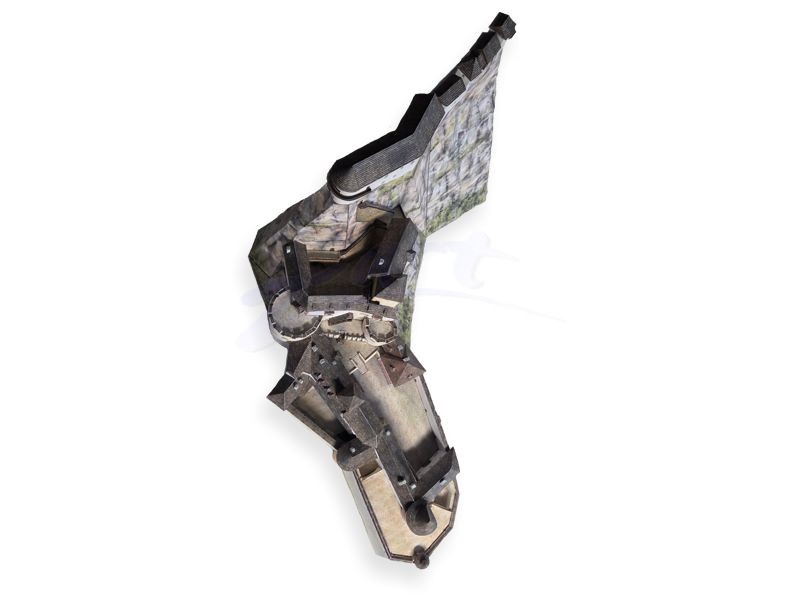 Orava Castle 3 2 |
 Orava Castle 3 3 |
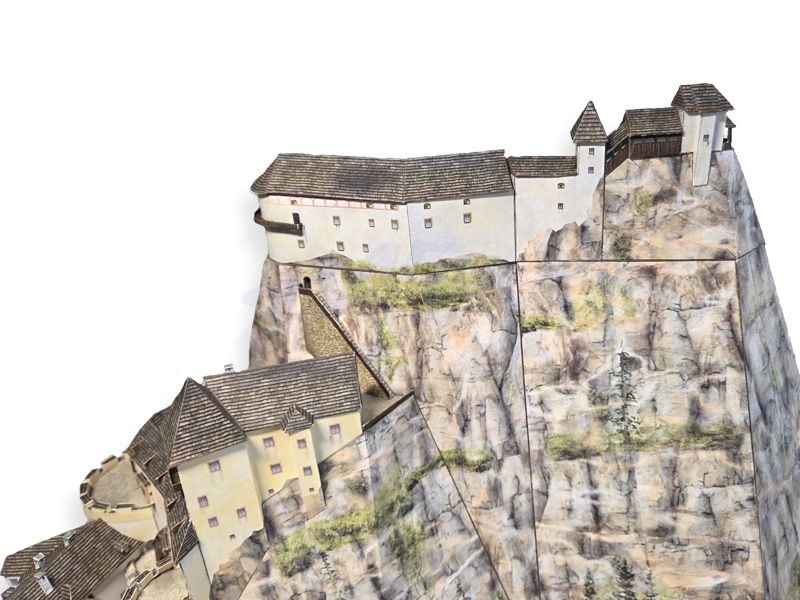 Orava Castle 3 4 |
 Orava Castle 3 5 |
 Orava Castle 3 6 |
 Orava Castle 3 7 |
 Orava Castle 3 8 |
You can order in our e-shop.
Back